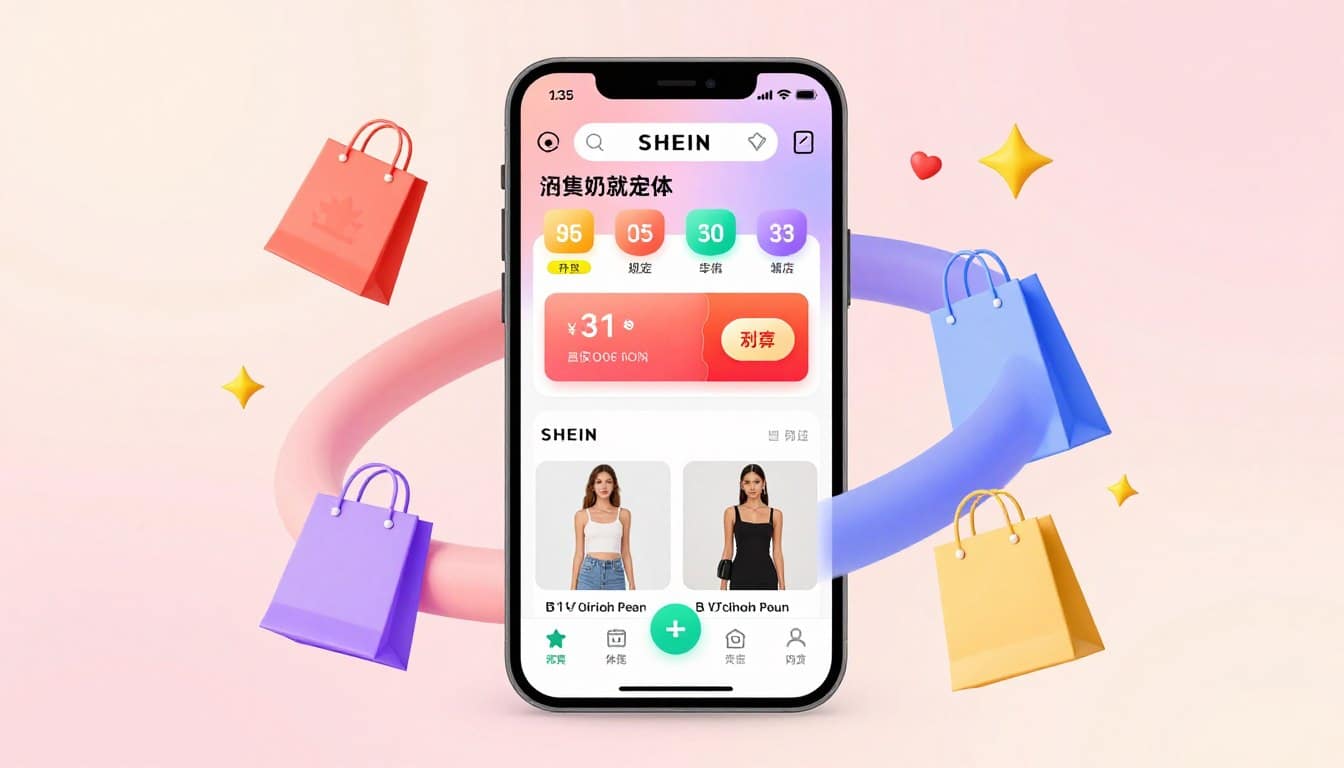
SHEIN, the fast-fashion retailer from China with a growing U.S. customer base, adds casual games to its mobile app. These shein app games and the larger shein games app system mix fun with shopping. They aim to boost time spent in the app and encourage repeat visits.
The games nudge shoppers to buy by giving playful rewards. Mobile commerce in the U.S. keeps growing. Retailers like H&M, Zara, and Amazon show how gamification lifts loyalty and average order size.
Anúncios
SHEIN’s approach matches this trend. Its gaming app offers quick, mobile-friendly games that fit well with Gen Z and Millennials. This design also helps the brand reach its business goals.
Common features in SHEIN mobile games include earning coupons, collecting coins or points, and unlocking limited-time discounts. Users can also complete daily tasks to get rewards. These small wins keep users coming back. The games create clear steps from playing to buying. The goals of the game link with sales and promotions.
This article will look at how SHEIN adds games into shopping. It will highlight popular games and the entire game collection. The article will also review design and accessibility for many devices.
Additionally, it will outline rewards and how SHEIN makes money from games. It will explore community features and marketing uses. The goal is to provide useful insights for U.S. shoppers and app teams interested in retail and gaming.
Key Takeaways
- SHEIN uses in-app games to boost engagement, retention, and sales on its mobile platform.
- shein app games link rewards like coupons and coins with shopping to encourage purchases.
- Mobile-first design and short gameplay suit Gen Z and Millennial habits well.
- Retail gamification is a proven way brands increase loyalty and time spent in-app.
- Later sections discuss integration, popular games, user experience, rewards, and community strategies.
How SHEIN Integrates Games into the Shopping Experience
SHEIN weaves interactive play into its app to make shopping feel active, not passive. The brand places games where users naturally look. It ties rewards to real inventory and uses simple mechanics that fit short mobile sessions.
This approach nudges users to explore more categories and return daily.
Overview of in-app gaming features
Front-end placements include home-screen banners, a dedicated Games tab, and pop-up prompts during browsing. Game widgets appear on product pages or at checkout.
- Mini-games such as matching and puzzles
- Daily spin wheels and scratch cards
- Timed challenges and progress-based streaks
On the backend, games link to product categories for cross-promotion. They generate dynamic rewards like coupon codes tied to inventory. Outcomes push directly into the shopping cart or account wallet.
That connection makes play immediately useful for purchase decisions in the shein games app and the broader shein game collection.
Why retailers add games to mobile apps
Retailers aim to lift daily active users and extend session length. Games create habits that drive frequent app opens. They also boost first-party customer data collection.
Behavioral principles guide design: variable rewards keep attention. Limited-time offers play on loss aversion. Leaderboards or sharing add social proof.
In a crowded fast-fashion market, interactive features help a brand stand out and build loyalty.
How games influence browsing and purchase behavior
Incentives earned through games—discounts, coins, or coupons—lower checkout friction. They can increase average order value when threshold rules apply. Players often add items to meet a coupon minimum or to use earned credits.
Gamified goals push users to browse categories they might skip. Scarcity from seasonal or time-limited mechanics creates urgency. This shortens decision time and raises conversion odds for the shein app games and the wider shein game collection.
- Measured outcomes include higher conversion rates for players versus non-players
- Repeat purchase frequency tends to rise among active players
- Basket composition shifts when promotions target specific categories
shein app games: Popular Titles and Game Collection
SHEIN’s in-app play area offers quick diversions and reward-driven experiences. Users enjoy casual puzzle rounds and timed grab-the-item activities.
They also find spin-the-wheel promotions and flash challenges that give coins or coupon codes. These make the shopping app feel like a daily habit.
Spotlight on top shein app games
Match-three and tile-matching mini-games are very popular. Their short sessions and simple swipe controls fit busy schedules well.
Timed “grab” games add thrill by requiring speed to win discounts. Spin-the-wheel features give instant chance-based wins.
Flash challenges reward quick completion with coupons, pushing users to act fast. Top titles share low entry barriers and clear reward paths.
Mobile-first controls explain why many users return multiple times per day.
Categories within the shein game collection (mini-games, daily spins, challenges)
The shein game collection divides into three groups. Mini-games offer short sessions with skill or luck mechanics like matching, tapping, or swiping.
These games encourage daily plays and casual competition. Daily spins and scratch cards depend on chance.
They deliver immediate rewards and create a habit: users open the app each day to try luck. This steady habit raises engagement.
Challenges and streaks ask for ongoing participation. Multi-day tasks reward progress with higher-value coupons or coins.
These tasks build long-term retention and nudge users toward repeat visits.
- Mini-games: quick sessions for daily engagement.
- Daily spins: chance mechanics that boost return rate.
- Challenges: multi-day goals that form habits.
Seasonal and limited-time games that drive engagement
SHEIN launches themed games during sales and holidays like Black Friday, Valentine’s Day, and summer drops.
These limited-time games link rewards to seasonal promotions and exclusive product releases. Mechanics change with each campaign.
Some events use collectible in-game items to unlock exclusive products. Others host leaderboard competitions with big prizes.
Push notifications, emails, and influencer posts boost participation during these short events.
User Experience: Design, Accessibility, and Playability
The user experience for shein mobile games must balance quick, satisfying play with smooth shopping flows. A short onboarding, single-thumb controls, and clear reward calls-to-action help players move from a mini-game to checkout with ease. Visual consistency between game screens and product pages keeps brand cues strong and lowers cognitive load when users claim coupons or apply coins.
Mobile-first design considerations for shein mobile games
Design the game for one-handed use and brief sessions. Prioritize large tappable targets, concise prompts, and progressive difficulty that rewards short wins. Use micro-animations and subtle sound to show success. Then, present the claim or apply coupon action in a single tap. Keep transitions smooth so the shein gaming app feels like one coherent experience, not separate modes.
Accessibility features and inclusive play
Support inclusive play with screen reader labels, scalable fonts, and a high-contrast theme. Offer captions for sound cues and alternative input options for players with limited mobility. Add modes where chance or turns replace fast reflexes so a wider audience can join shein app games. This approach also meets legal and ethical accessibility standards in the United States.
Performance and load times across devices
Optimize assets and use progressive loading to reduce wait times and data use on cellular networks. Keep code lightweight to lower battery drain and memory spikes, especially on diverse Android handsets and multiple iOS versions. Track metrics like average load time, crash rate, and memory use to detect problems that hurt retention for the shein gaming app.
- Key metrics to monitor:
- Average game load time
- Crash rate and error frequency
- Memory and CPU usage
- Retention vs. performance thresholds
Rewards, Promotions, and Monetization Strategies in the SHEIN Gaming App
Games inside shopping apps make play a path to earning value. In the SHEIN ecosystem, short sessions create repeat interactions.
These actions support promotional mechanics. Below, you will learn how reward types work, and how they help boost sales.
You will also see how monetization stays balanced, so play remains fun and enjoyable.
Types of rewards
- Discount coupons: percentage-off or fixed-dollar coupons that often carry a minimum spend requirement.
- In-app currency or coins: earned through tasks and redeemable for discounts, small items, or shipping credits.
- Loyalty points: accumulated points that unlock exclusive offers, free shipping, or tiered benefits.
- Limited-access product vouchers: short-lived passes for select drops or early access to seasonal merchandise.
Rewards often come with conditions. Coupons usually need a specific basket size. Coins frequently have expiry dates.
Tiered systems scale benefits as users stay active. This setup encourages longer engagement with shein app games and shein games app experience.
How games drive conversions and repeat visits
- Direct conversion: a won coupon can be applied immediately at checkout. This nudges casual browsers to make a purchase.
- Threshold nudges: rewards tied to minimum spending push the average order value up.
- Retention tactics: daily login bonuses, streak multipliers, and progressive unlocks encourage regular use.
These mechanics improve key metrics. Players convert at higher rates and have larger baskets when redeeming offers.
They also buy more often. Tracking these KPIs helps marketers fine-tune shein mobile games and the shein games app.
This improves lifetime value without overspending on promotions.
Balancing monetization with enjoyable gameplay
- Aggressive gating and scarce rewards can damage retention and brand trust.
- Best practices include showing clear odds for chance-based features and pacing reward distribution fairly.
- Offering free and premium paths allows casual users to feel rewarded. High-value customers can pay for better experiences.
Monetization also works indirectly. Gameplay data improves personalization and product recommendations.
This increases revenue while keeping the game fun. Thoughtful design helps keep shein app games, shein games app features, and shein mobile games enjoyable and profitable at the same time.
Community, Marketing, and Social Features Around Shein Games
The social layer around in-app play turns individual sessions into shared experiences. The shein gaming app builds community through shareable win notifications and easy posting of achievements to social networks. In-app friend invites spark referrals, while global and regional leaderboards create friendly competition and showcase top performers.
Community events often use simple, time-bound formats to boost participation. Examples include group goals where users gather coins to unlock platform-wide discounts. Tournaments with prize pools and collaborative challenges reward teamwork. These formats drive organic reach when players share progress with friends.
Influencer collaborations amplify launches and showcase playstyles to large audiences. Brands work with creators to host influencer-run tournaments and offer sponsored discounts exclusive to a creator’s followers. Co-branded in-game items launch limited campaigns. This approach helps popular shein app games reach Gen Z and other target groups faster.
Activation types vary by campaign goals. Influencer-hosted streams demonstrate gameplay and rewards in real time. Sponsored posts link to in-app events and exclusive promo codes. Co-branded skins or items give creators tangible ways to tie their identity to a game experience.
Measurement focuses on a concise set of KPIs that map play to purchase behavior. Essential metrics include daily active users (DAU), game session length, and D1/D7/D30 retention. Conversion rate from game-to-purchase, average order value among players, coupon redemption rates, virality coefficient (K-factor), and LTV uplift tied to gamified features are also tracked.
Analytics uses classic techniques adapted for app games. A/B testing of reward structures isolates what drives spend. Cohort analysis tracks long-term behavior after exposure to top shein app games. Funnel analysis follows users from gameplay to checkout. Attribution modeling links influencer-driven installs to final conversions.
Data collection should respect user privacy and comply with U.S. rules and platform policies. Privacy-respecting analytics balance actionable insights with consented tracking. This keeps campaigns measurable while protecting user trust.
Conclusion
SHEIN’s in-app games blend casual entertainment with commerce to boost engagement. They drive conversions and strengthen loyalty among younger, mobile-first shoppers in the United States. This mix helps make shopping more fun and interactive.
The SHEIN app games ecosystem—from daily spins to seasonal challenges—turns short play sessions into measurable shopping actions. The game collection acts as a practical retention tool rather than just a gimmick. This approach keeps users coming back more often.
For shoppers, the takeaway is simple: check the Games tab regularly for coupons, coins, and limited-time offers. These deals can reduce checkout friction and add fun to browsing. It’s an easy way to save while enjoying the app.
For product and marketing teams, prioritize mobile-first design, fair reward pacing, robust analytics, and social amplification. These help extract maximum ROI from gamified features. Teams should focus on the SHEIN games that truly influence purchase behavior.
Looking ahead, expect deeper personalization of game experiences and tighter links between gameplay and product discovery. More creative partnerships with influencers and seasonal promotions will appear. These trends will help grow the app’s appeal and effectiveness.
As mobile commerce evolves, the SHEIN game collection will likely move from novelty to a core strategy for retention and revenue. Success depends on keeping player experience, performance, and measurable outcomes central to design.
Content created with the help of Artificial Intelligence.