Anúncios
In today’s busy work life, keeping up with your health is key. It helps you work better and feel good. Doing simple stretches at your desk every day is important. Sitting too long and doing the same tasks can make you stiff and sore.
With easy stretches, you can fight off those aches and pains. This makes your day more comfortable and helps you do better at work.
Anúncios
The Importance of Stretching at Your Desk
In today’s work world, sitting too much is a big health risk. Being seated too long can lead to neck and back pain, obesity, and other problems. An average desk worker spends around 1,700 hours a year sitting. This can cause serious health issues like deep vein thrombosis and weakened muscles. It’s clear we need to find good solutions quickly.
Understanding the Risks of Sedentary Work
Sitting too much can increase your risk of heart disease and some cancers. It affects not just your body but also your mood and how well you work. Without moving regularly, your muscles get tight and tired, putting too much pressure on parts like your lower back. Experts recommend standing and moving every 30 minutes to avoid these issues.
The Benefits of Regular Stretching
Stretching during the workday can make a big difference in health. Simple stretching moves improve flexibility, ease muscle tension, and reduce pain. Doing exercises like leg raises and tummy tucks at your desk fights off tired muscles and improves blood flow. This helps bring important nutrients to your muscles, making you feel more energetic and ready to work. Stretching regularly also helps keep a good posture and protects against health problems from sitting too much.
Common Aches and Pains from Desk Jobs
Sitting long hours at a desk can lead to many discomforts. These are often called common desk job pain. It’s not just annoying; it can turn into long-lasting pain affecting your day-to-day life and work. Knowing the kinds of pain from sitting too long and bad posture can help people avoid them.
Neck and Shoulder Pain
Neck and shoulder pain often comes from not sitting right, like slouching. This bad posture puts extra pressure on your muscles there, causing pain. Doing stretches for your neck and shoulders can really help loosen them up. Also, moving around often during the day is key to stopping this pain.
Lower Back Pain
A lot of desk workers say they have lower back pain. Sitting too much can make your lower back hurt or lead to more serious issues. Stretching and some exercises can ease your back muscles. This is good for your spine and lowers injury risk. Even simple things like standing or walking a bit can make a big difference.
Carpal Tunnel Syndrome
Carpal tunnel syndrome happens from doing the same wrist movements over and over, like typing. It causes tingling and weakness in the hands. If not taken care of, it gets worse over time. But, stretches for your wrists and fingers can help manage and avoid these symptoms. They keep your hands healthy and reduce pain.
Easy Office Desk Stretches
Adding quick stretches to your day helps ease work tension. These small moves boost blood flow, increase flexibility, and enhance your overall health. Make sure to choose stretches that work well at your desk to help your body while you work.
Quick Stretches to Relieve Tension
Stretching throughout the day brings many benefits. Here are some good moves to fight off stiffness:
- One Arm Hug: Cross one arm across your body and place it on the back of the opposite shoulder. Use the other arm to gently push the elbow back. Hold for 30 seconds and repeat 2-3 times per arm.
- Office Chair Back Stretch: Sit and reach both hands behind your chair. Arch your back and move your chest forward holding for 30 seconds. Repeat 5 times.
- Seated Tricep Stretch: Extend one arm and bend the elbow to face outward. Use the other arm to push the elbow back, holding for 30 seconds. Repeat 3-5 times per arm.
Stretches for Flexibility and Movement
Doing stretches for flexibility helps your body stay active:
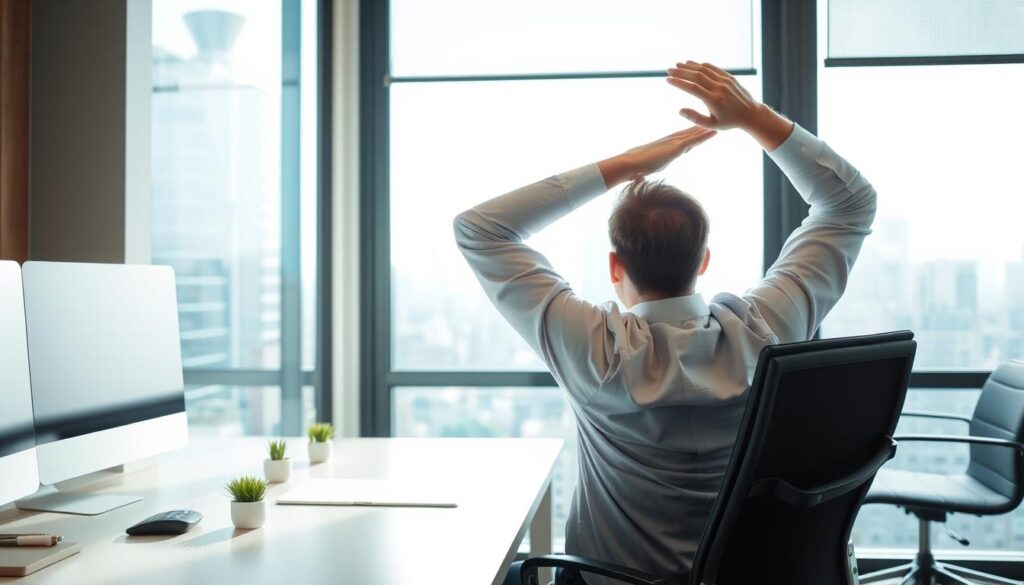
- Reach for the Sky: Interlock your hands above your head, palms up. Sit straight, push palms upward, and elongate your spine. Hold for 10 seconds, repeating this 5 times.
- Calf Raises: Stand with legs straight and raise your heels to the balls of your feet for 20 raises.
- Seated Spine Twist: Cross one leg over the other and twist your body towards the top leg, using the chair arm for support. Hold for 30 seconds and repeat this 3 times per side.
Upper Body Stretches
Adding upper body stretches to your day can make you feel better at work. These exercises improve shoulder movement, reduce stress, and boost blood flow. Try these stretches during your office break for better comfort.
Triceps Stretch
To do a triceps stretch, lift one arm above your head. Bend at the elbow to touch the shoulder blade on the other side. With your other hand, gently pull the elbow closer to your head. This stretch eases arm and shoulder tension. Keep it up for 10 to 30 seconds for the best effect.
Overhead Reach
Raise both arms up and lean to a side for this stretch. It works the sides and also gets your back muscles moving. Stay in this position to make your upper body more supple. It also helps with any discomfort from sitting too much.
Chest and Shoulder Stretch
Interlock your hands behind you and gently push your chest out. This opens up the chest and fights the slump that comes from desk jobs. Just 10 seconds of this can ease tension and make your shoulders more flexible.
Torso and Spine Stretches
Keeping a healthy spine is key to feeling good. Torso stretches are a big help. They not only make your spine more flexible but also reduce pain from sitting too much. Adding simple stretches while at your desk can improve posture and comfort over time.
Forward Stretch for the Upper Back
This stretch works wonders for tightness in the upper back. Start by sitting at your chair’s edge. Clasp your hands in front of you and lower your head to your chest. Let your shoulders round forward. Stay in this pose for 15 seconds and enjoy the stretch. Do this stretch 2-3 times, breathing deeply to feel the most relief.
Torso Rotation Stretch
For better spine flexibility, try the torso rotation stretch. Sit and grab the back or side of your chair. Gently twist your upper body to the side, but keep your hips straight. Hold for 15 seconds, then switch sides. This helps loosen tension and improves spine flexibility.
Leg and Knee Stretches
Adding leg stretches to your daily routine can boost mobility and comfort at your desk. Knee bends help ease tension and keep your legs healthy. Here are a couple of good stretches to try.
Hip and Knee Flexion Stretch
Sit down and get comfy in your chair. Pull one knee up to your chest while the other foot stays flat. Keep it like this for 15-30 seconds. This move is great for your lower back and hips, especially if you sit a lot. It also gets your blood flowing and eases leg tightness.
Hamstrings Desk Stretch
Sitting down, straighten one leg in front of you with your heel down. Lean forward from your hips towards your outstretched leg. Stay in this stretch for 15-30 seconds, then switch legs. This stretch is great for your leg health and blood flow. It helps with the stiffness from sitting too long.
Neck and Shoulder Relief Exercises
Adding neck relief exercises to daily activities boosts shoulder health. These moves focus on loosening tension from long sitting periods. You’ll find effective ways to soothe neck and shoulder pain below.
Shoulder Shrugs
Sit straight and keep your shoulders relaxed. Raise your shoulders up to your ears, hold for a few seconds, then lower them. Do this 10-15 times to ease tension around your neck and shoulders.
Neck Rolls and Stretches
Neck rolls are great for easing stiffness. Begin by gently pulling your chin to your chest and hold for 10-15 seconds. Do this 5-10 times for a good neck stretch. For more flexibility, lean your head towards one shoulder until you feel a stretch on the other side of your neck. Keep this up for 15-20 seconds, then switch. Do this 2-3 times on each side.
Upper Trap Stretch
The upper trap stretch helps relax the trapezius muscles. Whether sitting or standing, tilt your head towards one shoulder. Lightly apply pressure with your hand for a deeper stretch. Keep this position for 15-20 seconds, then switch sides. Repeat 2-3 times on each side. Doing these neck exercises daily enhances posture, movement range, and lessens discomfort from sitting too long.
How to Integrate Stretches into Your Workday
Adding stretches to your workday can make a huge difference in how you feel. Most adults sit for about 6.5 hours every day. So, it’s key to remind yourself to move often. Stretching often can ease the stiffness of sitting too long and help you stay focused and productive.
Setting Reminders for Breaks
Setting timers or using apps can help you remember to take stretch breaks. Studies show short movement breaks, like five minutes every half-hour, can reduce the negative effects of sitting a lot. This habit makes it easier to fit stretching into your daily routine.
Incorporating Movement During Meetings
It’s also a good idea to move during meetings. You can do stretches during phone calls or stand in virtual meetings. These small changes help make your work environment more active. And they’re good for your mind and body.
Stretching Techniques for Maximum Effectiveness
Adding the right stretching to your day is key for your health. The right way to stretch improves how flexible you are and makes you more relaxed. To get the most out of stretching, focus on how you breathe and being aware of your body.
Breathing During Stretches
Taking deep breaths when you stretch is super important. Breathing in deeply before you stretch helps your muscles expand more. Breathing out lets you stretch deeper. This helps your blood flow better and gives you more energy. It also makes you more productive and focused. Making sure your breathing matches your movements makes stretching smoother and more effective.
Listening to Your Body
Knowing your body well makes stretching work better. Being aware of how stretches feel helps you avoid hurting yourself. It’s crucial not to stretch too far and respect your limits. Listen to your body to stay safe. This keeps you flexible and your body in good shape. By paying attention to pain, you’ll know when to adjust your stretching or change your position. This balance helps you get the most out of stretching.
Additional Tips for a Healthier Workspace
A healthier workspace boosts both comfort and productivity. Using ergonomic furniture is key to this. Such furniture helps keep a good posture, cutting down risks of pain from sitting too long.
The Importance of Ergonomic Furniture
Ergonomic furniture is essential for a healthy workspace. Chairs that support your back and desks that adjust can make you more comfortable. If your posture is bad, you might feel more pain. Ergonomic furniture makes you less tense and helps blood flow better.
Using a Standing Desk
Switching to a standing desk has many benefits. It improves blood flow and reduces pain from sitting too much. Stretching or moving around while seated helps too. Adding simple exercises like squats, push-ups, and calf raises makes sitting less harmful. Short activities during the day are good for your mind and work performance.
Other Ways to Stay Active at Work
Staying active at work takes creativity and sticking to it. Small changes can boost energy and well-being. Taking walking breaks and using stretch alert apps help beat the stillness of desk jobs.
Taking Short Walks
Taking short walks refreshes both body and mind. It’s good to walk around a bit throughout the day. Walking improves blood flow, lifts your mood, and fights the downsides of sitting too long.
Walking at work makes you more productive and focused. It leads to a healthier workplace.
Using Stretch Reminder Apps
Apps like StretchClock keep you on track. They remind you to walk or stretch. Small changes like these keep you moving at work with little time needed.
This makes sure your day is full of action. These apps change reminders into chances to move. This boosts your health and how much you get done.
Conclusion
Adding stretches to your daily work routine is key for good health and well-being. Many people sit for more than 8 hours a day at work. This makes doing stretches very important.
Stretching often can ease pain from sitting too long and boost your work by bettering blood flow and mental focus. Simple desk stretches can cut down neck and back pain, fix your posture, and make you more flexible. Stretching regularly helps avoid serious health problems from not moving enough. It makes the workplace healthier by easing muscle tension and improving circulation.
Making stretching a habit at work can improve your job performance and decrease injuries. Programs or just reminders to stretch are crucial. They keep you both physically and mentally strong, helping everyone do their best at their jobs.
FAQ
What are the benefits of stretching during work hours?
Stretching during work hours boosts flexibility and reduces discomfort. It also lowers stress and betters focus. Doing regular stretching can cut pain by up to 72% and improve mood by increasing blood flow to tight muscles.
How often should I take breaks to stretch at my desk?
You should stretch every 30 to 60 minutes. Using timers or stretch reminder apps makes sure you move and stretch often during your day.
What stretches can I do without leaving my desk?
Easy desk stretches include shoulder shrugs, neck rolls, triceps stretches, and torso twists. You can do these sitting down and they quickly ease tension without a lot of time.
Can stretching help prevent repetitive strain injuries?
Yes, stretching regularly can prevent injuries like Carpal Tunnel syndrome. It eases stiffness and boosts blood flow to areas in need.
Is it necessary to use ergonomic furniture while stretching at my desk?
Ergonomic furniture isn’t a must, but it’s very helpful. It increases comfort and supports proper posture, making stretching more effective and good for you during work.
What stretches are effective for lower back pain relief?
For lower back pain, the hip and knee flexion stretch and the seated forward bend are good. They help ease tension and improve spinal health.
How can I incorporate movement into virtual meetings?
Move by standing up or stretching while on phone calls or video chats. It boosts physical activity and helps you stay alert and focused.
Should I focus on breathing while stretching?
Yes! Proper breathing during stretching makes it more relaxing and allows for deeper stretches. This makes your stretching sessions more effective and refreshing.
What are the best stretches for neck and shoulder relief?
Neck rolls, shoulder shrugs, and the upper trap stretch are fantastic for easing neck and shoulder tension. They’re great for those who sit a lot and have poor posture.
Why are short walks recommended during work hours?
Short walks boost mood, energy, and fight the negative effects of sitting too long. They’re key for your health and happiness.
Content created with the help of Artificial Intelligence.